



The fascination with prehistoric creatures has long captivated the imaginations of scientists and the general public alike. Woolly mammoths, giant sloths, and saber-toothed cats are emblematic examples of Earth’s rich evolutionary history, once roaming the landscapes to the curiosity of early humans. As researchers labor to unearth the mysteries surrounding these magnificent beings, their quest for understanding has recently been invigorated by compelling new findings from the frigid northernmost regions of our planet, where climate change is causing permafrost to thaw and release long-hidden relics from the Ice Age.
One particularly notable discovery was made by paleontologists in Yakutia, Russia, where they unearthed the first known mummy of a saber-toothed cat, notably Homotherium latidens. This juvenile specimen, only three weeks old at death approximately 35,000 years ago, was remarkably preserved within the Siberian permafrost. The mummy was found nearly intact, still exhibiting its soft fur and detailed footpads, affectionately termed “toe beans” by cat enthusiasts. The genetic material obtained from this ancient cub holds the promise of revealing insights into the lifestyle and dietary habits of the species, enriching our understanding of how it hunted and interacted with its environment.
Researchers noted that anatomical comparisons with contemporary lion cubs revealed stark differences, such as darker pelage, reduced ear size, and unique adaptations that suggest the presence of massive incisors that sadly never had the opportunity to mature. Such findings underscore the extensive anatomical diversity that characterized ancient wildlife and the evolutionary narratives that unfold as scientists delve deeper into their remains.
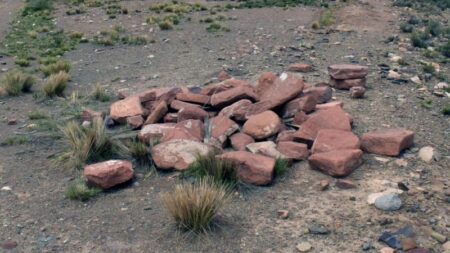
In addition to these prehistoric explorations, modern scientists continue to grapple with ephemeral mysteries of human history, such as the ongoing quest to locate Amelia Earhart’s missing Lockheed 10-E Electra airplane. Recent sonar imagery indicated a peculiar formation on the Pacific Ocean’s floor near Howland Island, yet further investigation revealed the object to be nothing more than a natural rock arrangement. This disappointment led Tony Romeo, CEO of Deep Sea Vision, to comment humorously on the coincidental formation, likening it to a cosmic joke played on the searchers over the last 87 years.
Turning our gaze upwards, astronomers have recently captured an unprecedented image of WOH G64, a massive red supergiant star located approximately 160,000 light-years away in the Large Magellanic Cloud. This remarkable image shows a spectacular cocoon of dust and gas enveloping the star, accompanied by an outer ring of dust that expands outward. There is a growing belief among astronomers that WOH G64 is shedding its exterior layers in preparation for a cataclysmic explosion, potentially a supernova, that could soon be visible from Earth.
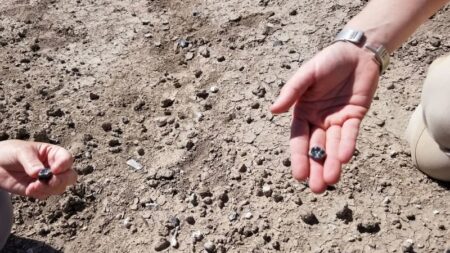
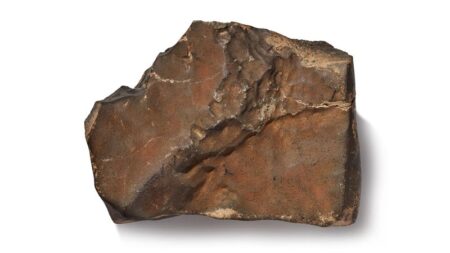
While the cosmos is unveiling its mysteries, our own planet recalls its ancient past. A striking hypothesis suggests that Earth might have housed a rocky ring—similar to the famed rings of Saturn—about 466 million years ago. This proposition derives from the analysis of numerous meteorite strikes within 30 degrees of the equator, which may indicate they fell from this erstwhile ring. Moreover, this theory could offer explanations regarding one of Earth’s most significant global cooling events, theorized to have been caused by the shadow cast by such a ring.
Esteemed scientists Kelly and Zach Weinersmith, in their recent publication “A City on Mars,” further contemplate the future of human exploration, addressing the considerable hurdles that SpaceX CEO Elon Musk will face in his ambition to settle Mars within three decades. From reproduction complexities to life-sustaining challenges, their insights compel us to consider the practicalities of life beyond our home planet.
In the realm of human biology, a groundbreaking effort has been made by thousands of scientists who have meticulously analyzed over 100 million cells from more than 10,000 individuals. This monumental research aspires to construct a comprehensive cellular atlas of the human body, an ambitious task considering that each individual possesses more than 37 trillion cells. Insights gleaned from this endeavor are expected to illuminate how cellular variants and mutations impact health and disease progression, propelling our understanding of biological mechanisms forward.
As we reflect on these remarkable scientific narratives, it becomes clear that our exploration of history—both past and future—continues to reveal extraordinary stories, contributing to humanity’s ceaseless thirst for knowledge. Whether through the lens of paleontology, astronomy, or biology, the pursuit of understanding remains a testament to our enduring curiosity and resilience.